

We sat down with Jesper Glahn, the Chief Commercial Officer (CCO) of Copenhagen Atomics, to discuss the company’s current work and its long-term vision for accelerating fusion development.
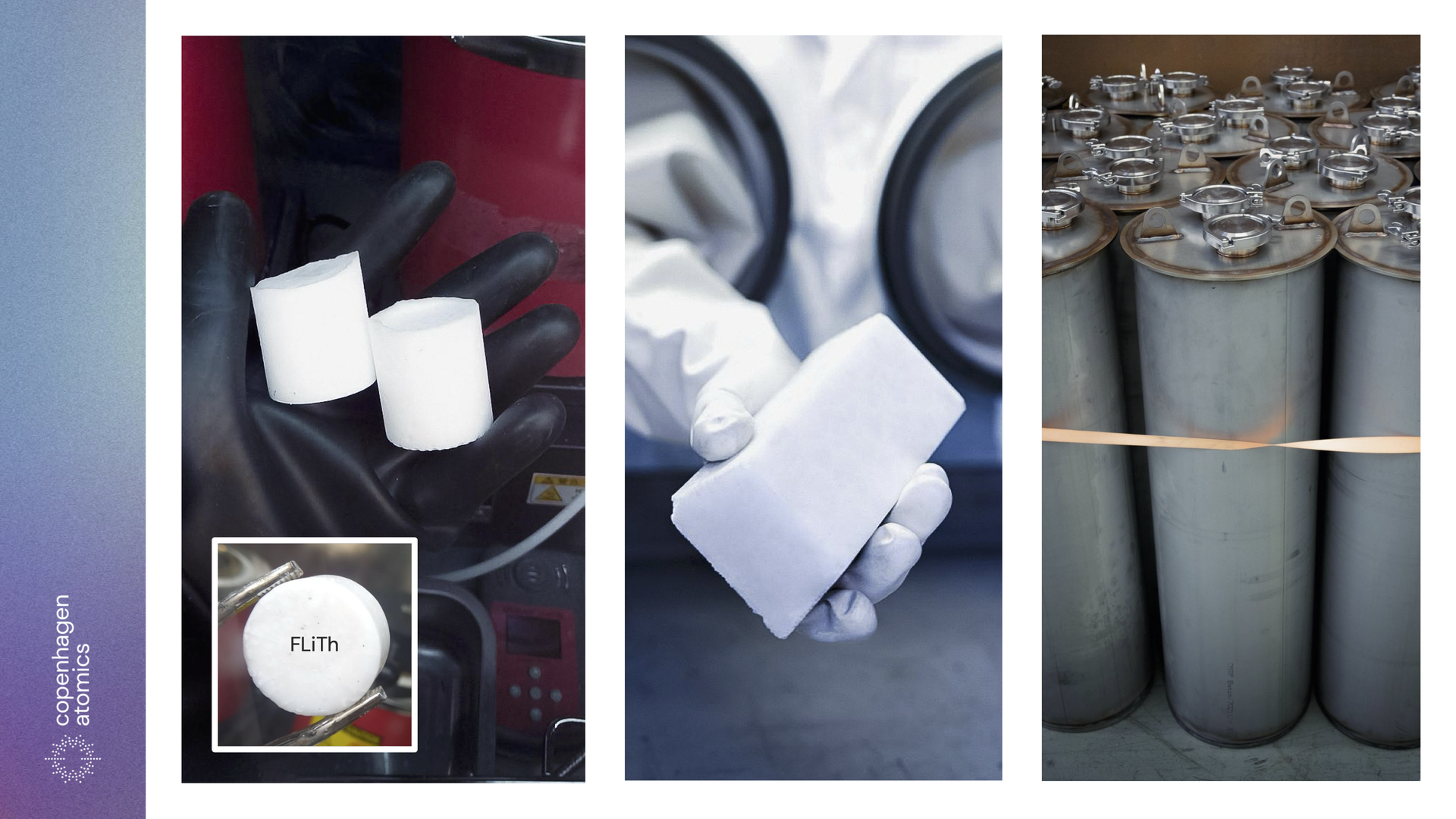
Copenhagen Atomics specializes in developing mass manufactured molten salt thorium reactors. They are bringing their molten salt fission reactor expertise to the fusion world, suppling a variety of chemical products, including highly purified fluoride salts like FLiNaK and FLiBe as well as enriched Lithium-6. They also supply salt tanks to contain highly purified salts. In addition to materials, Copenhagen Atomics supplies proprietary molten salt test loops, testing services, high-temperature pumps, and measurement equipment used for testing and validating fission and fusion technologies.
Copenhagen Atomics has carved out a unique position as a molten salt and related hardware supplier to the private fusion industry. How much of your current growth is driven by providing salts and test systems to fusion startups compared to related products for the fission industry?
The big growth relates to the fusion industry that over the recent years has seen a solid uptake. Where we fit in is that our technology builds on decades of work and experience and this comes in handy for the fusion industry that wants to advance rapidly. These are all technologies that are used for our own reactor design and can also be used for fusion reactor designs.
Many fusion designs plan to use molten salts like FLiBe for tritium breeding and heat transfer. What specific advantages does your molten salt technology offer fusion developers over other providers?
Initially our main contributions are purified salts, including FLIBe, and enriched lithium (Li6). We have methods to provide highly purified salts at ton scale volumes and this is unique at present. We have for many years developed and refined our manufacturing processes and at the same time been an open company that believes in collaboration with the ecosystem. Experience curve is a key factor and we have more than 350 years of test time on our systems and knowledge about the optimal purity levels.
For a D-T (deuterium-tritium) fusion plant to be viable, it will likely breed its own tritium in a lithium-rich blanket. How is Copenhagen Atomics' expertise in lithium salts helping fusion companies tackle the challenge of tritium breeding?
From the get go we will focus on supplying Li-6 and downstream we may look at tritium production. There is going to be a demand on Li-6 in high volumes and since we need the Li-7 for our own solution there will be a strong fit. So the main thing is to manufacture Li-6 in ton-scale and doing so with a new method not using mercury. This will in turn enable the fusion industry to breed tritium in their blankets. In a fission system you will want to remove nano bubbles of xenon and krypton from the salt while the system is running. This is very similar to removing tritium from a fusion tritium breeding blanket. Thus we can share experience and test systems for this purpose.
Corrosion is a potential issue for long-term fusion machine viability. Can you explain your proprietary salt purification process and how it ensures the level of purity required to mitigate corrosion issues?
We have a proprietary method to purify salt that is scaled up to ton-scale volumes and our standard batch is of 1m3 salt. We have learned that a purity level of less than 100 ppm oxides is sufficient to avoid corrosion problems. On top of inhouse corrosion studies, University of Liverpool in the UK has run a large study using Copenhagen Atomics highly purified salts to measure corrosion levels in SS316 and other materials.
How do your Molten Salt Test Loops accelerate the R&D cycle for fusion developers?
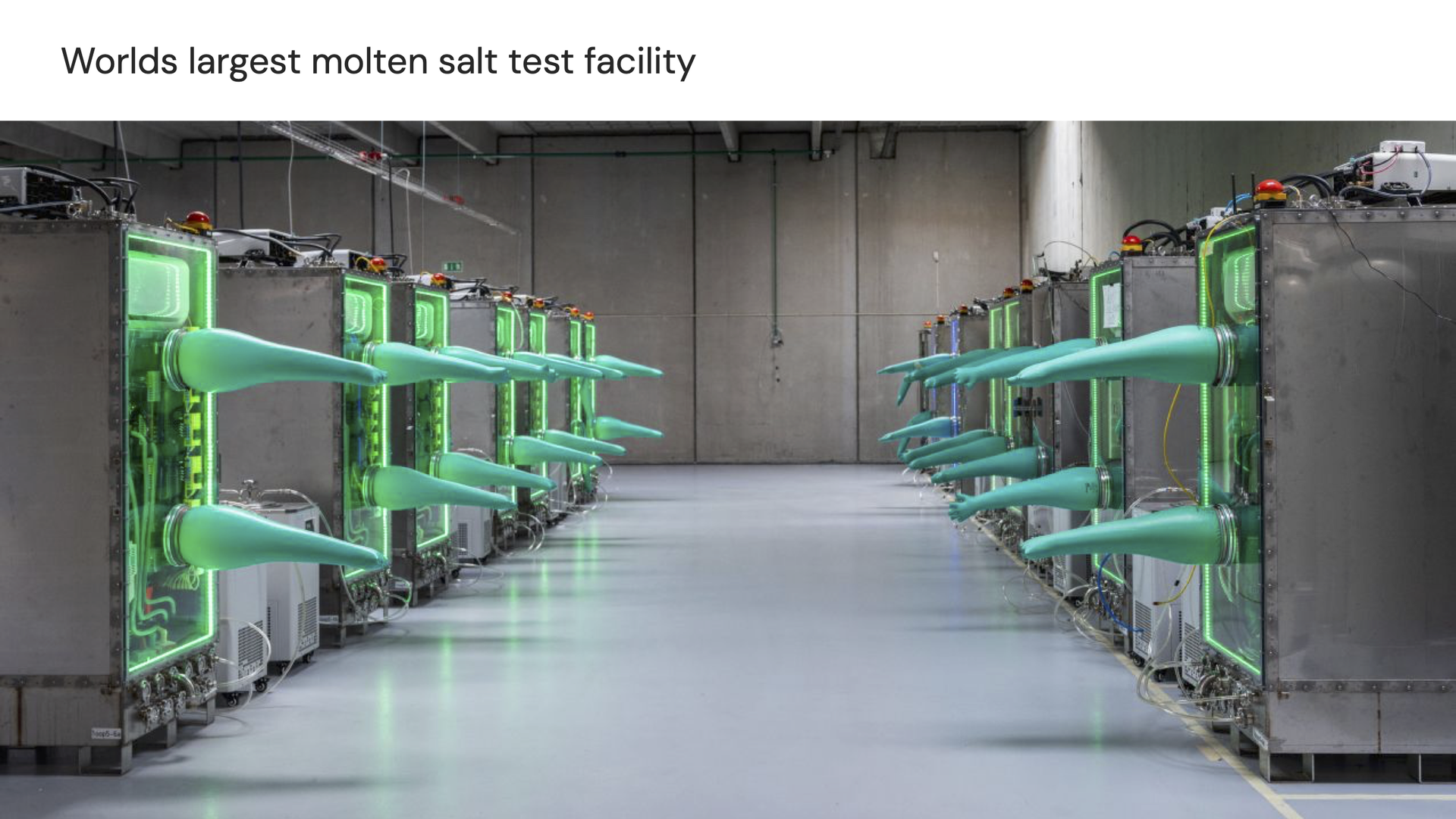
Access to technology and access to supply chains on key materials are the main drivers. The test loops enable the customer to make various experiments and gain knowledge about working with pumped molten salt prior to building reactors. This enables the user to identify problems and fix them at an earlier point in time. Most of our test loop customers found that they were able to move significantly faster than other teams who build their own test loops.
There is growing discussion about the global supply of Lithium-6 for fusion blanket applications. Is Copenhagen Atomics actively working on isotope separation or enrichment technologies to secure this part of the fusion fuel cycle?
Yes, this is a key roadmap item for our own reactor design since we need Li-7. We are working to refine our proprietary method on lithium enrichment and aim to be at ton scale production within a few years.
You often speak about building energy hardware on assembly lines. As fusion moves from R&D to commercialization, how can your manufacturing approach help lower costs for the first generation of fusion plants?
Our main contribution to the fusion industry will be in the R&D phase where fusion system developers can move much faster by using already proven components and high prity salts as well as get access to Li-6 earlier than through national lab projects. We provide fully integrated systems, with valves, pumps, heat exchangers, sensors, transport tanks, vacuum systems and more. Using these systems in fusion R&D may cut 3 - 5 years of their timeline.
Managing molten salt requires instrumentation that doesn't melt or corrode. What features or real-time monitoring capabilities have you integrated into your loops that are particularly valuable for fusion machines?
Online salt chemistry measurements, which indicate level of corrosion in the system as well as types of impurities in the salt. Online sampling, which allows operators to remove samples from the salt loop while it is running. Online drop channels also allow operators to insert small ingots (100gram) of salt into the loop while it is running. This allows users to change the salt composition while running a test and see how this changes real time online measurements. Other systems include flow sensors, filters with a range of different filter mesh size (1 𝜇m - 50 𝜇m). We have liquid level sensors, which tolerate very high radiation levels and online salt density measurements. Many different types of temperature measurements depending on the need, pressure sensors both for gasses and radioactive salts. Sample holders, valves, windows and many more.
Without naming names, what are the most common technical requests you receive from the major private fusion players today? Does the industry need more raw materials, more testing data, or more standardized components?
The main request from the fusion industry we have is on enriched lithium (Li-6). This seems to be a main challenge for supply chain in the industry, and for the same reason we have a high focus to address this topic. Developing ground breaking technology naturally calls for providing various products and services. What we provide are products and services that we have for our own purpose and can easily offer to the fusion industry.
As we look toward the future, many fusion companies aim to have pilot plants online. What is Copenhagen Atomics’ roadmap to becoming the primary global foundry for the specialized salts and thermal systems these plants will require?
Our main edge is that we are ahead on the experience curve compared to most industry players and we seek to maintain this stronghold and to provide cutting edge solutions. We see significant opportunities on FLiBe salt and on the enriched lithium - this is where we can be a significant partner to the fusion industry.
To learn more about Copenhagen Atomics, contact Jesper Glahn at [email protected] or visit their website.

