
Current Transducer

Description
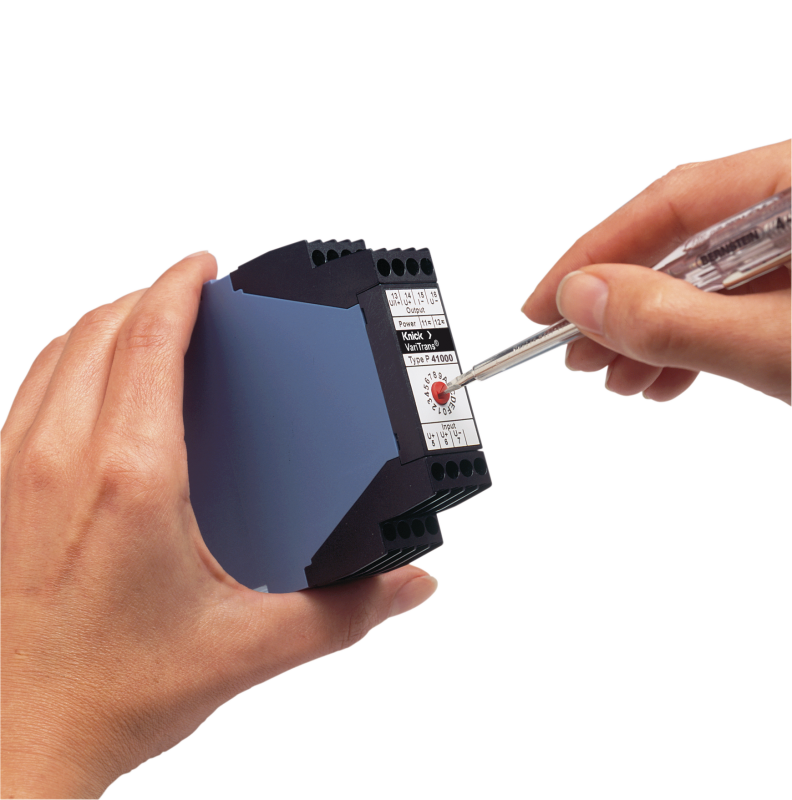
The Knick P41000 is a universal high-voltage isolation amplifier designed to convert bipolar voltage signals — from shunt-based current measurements in the millivolt range up to ±100 V — into clean, galvanically isolated standard output signals, making it well-suited for monitoring the high-potential power circuits, neutral beam injectors, and capacitor banks found in nuclear fusion systems. With working voltages up to 3,600 V AC/DC and transient withstand capability up to 15 kV, it provides robust protection for downstream control and data acquisition equipment against the extreme electrical stresses inherent to fusion power systems. Its exceptional common-mode rejection ratio of greater than 150 dB ensures signal fidelity in the intense electromagnetic noise environments generated by fusion plasmas and superconducting magnet arrays, while a fast 110 µs rise time enables accurate capture of rapid transient events during plasma ignition and disruption sequences. With up to 16 switchable calibrated input/output ranges, a field-proven MTBF of over 2,000 years, and vacuum-encapsulated construction, the P41000 delivers the flexibility, reliability, and longevity that long-duration fusion research and commercial fusion operations demand.
Technical Specifications
Function: Current measurement via shunt resistor on high potential
Input: 0 ... (±)50 mV up to 0 ... (±)100 V
Output: 0 ... (±)10 V, 0 ... (±)20 mA, 4 ... 20 mA, Peak or TRMS values
Isolation AC/DC: up to 3,600 V
Test Voltage: 10/15 kV AC
Power Supply: 22 ... 230 V AC/DC
Cutoff Frequency: Cutoff frequency 5 kHz; lower cutoff frequencies on request
Ambient operating temperature: –10 ... 70 °C
Dimensions (W x L x H): 22.5 x 90 x 118 mm
Special features: Exceptionally high MTBF of 2165 years (Mean Time Between Failures), based on field data, Switchable (16 input/output signal combinations) or customized versions

