
Projects
Add and manage your project page
Century
Zap Energy
2024 - Present
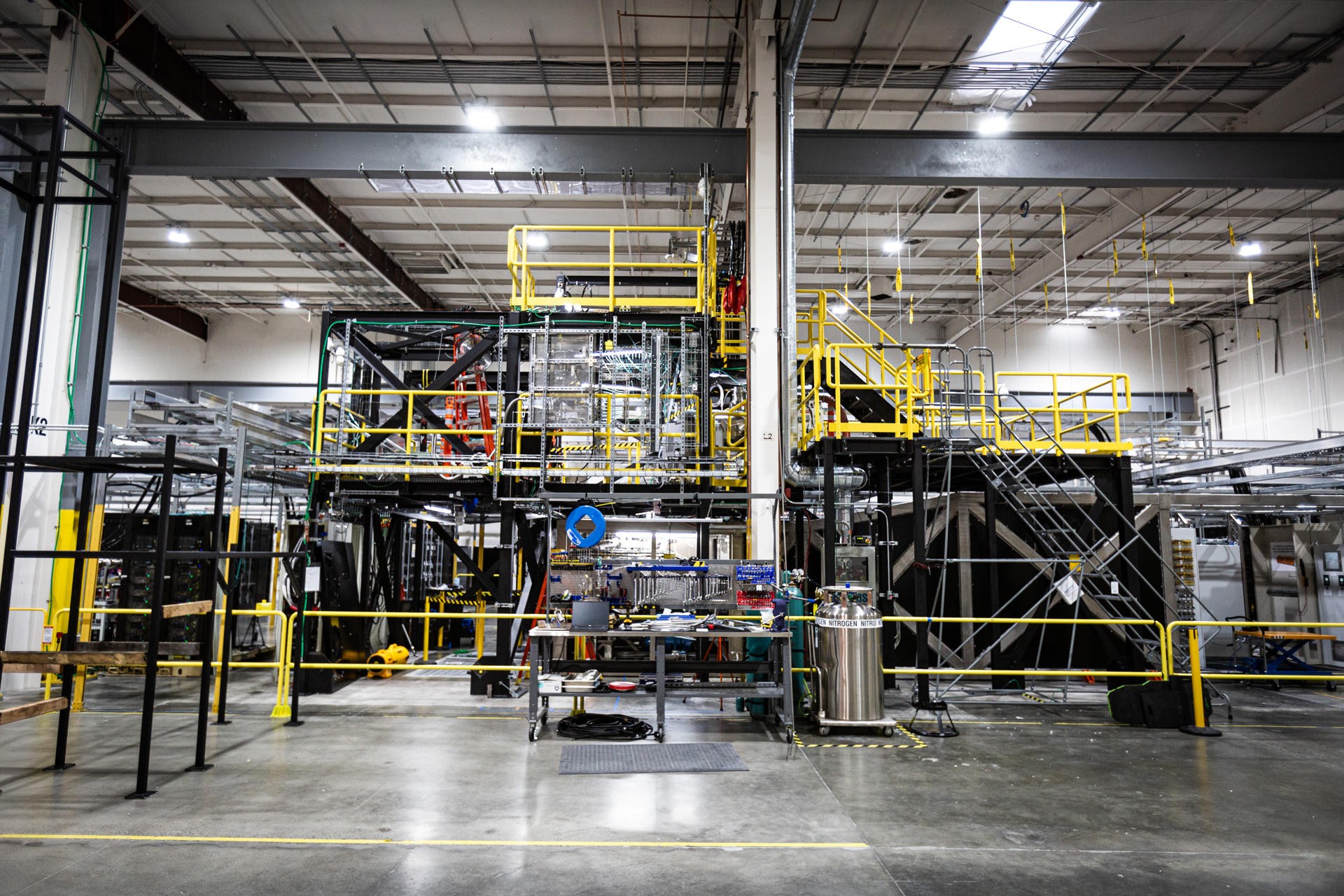
Century is the centerpiece of Zap Energy's program developing and integrating power handling systems suitable for future power plants. Three primary technologies under development include high average-power repetitive pulsed power, high duty-cycle cathodes, and liquid metal wall systems. Century is capable of firing non-reacting hydrogen SFS Z-pinch plasmas into a liquid metal-lined container at sustained repetition rates on the order of 0.2 Hz. Century is based on FuZE device designs but is not operated with deuterium fuel gas in order to alleviate the need for radiation shielding from fusion byproducts. The pulsed power driver and liquid metal heat exchanger are both designed to sustain input powers of 100 kW.
COBRA
Cornell University
FuZE
University of Washington
2015 - 2025
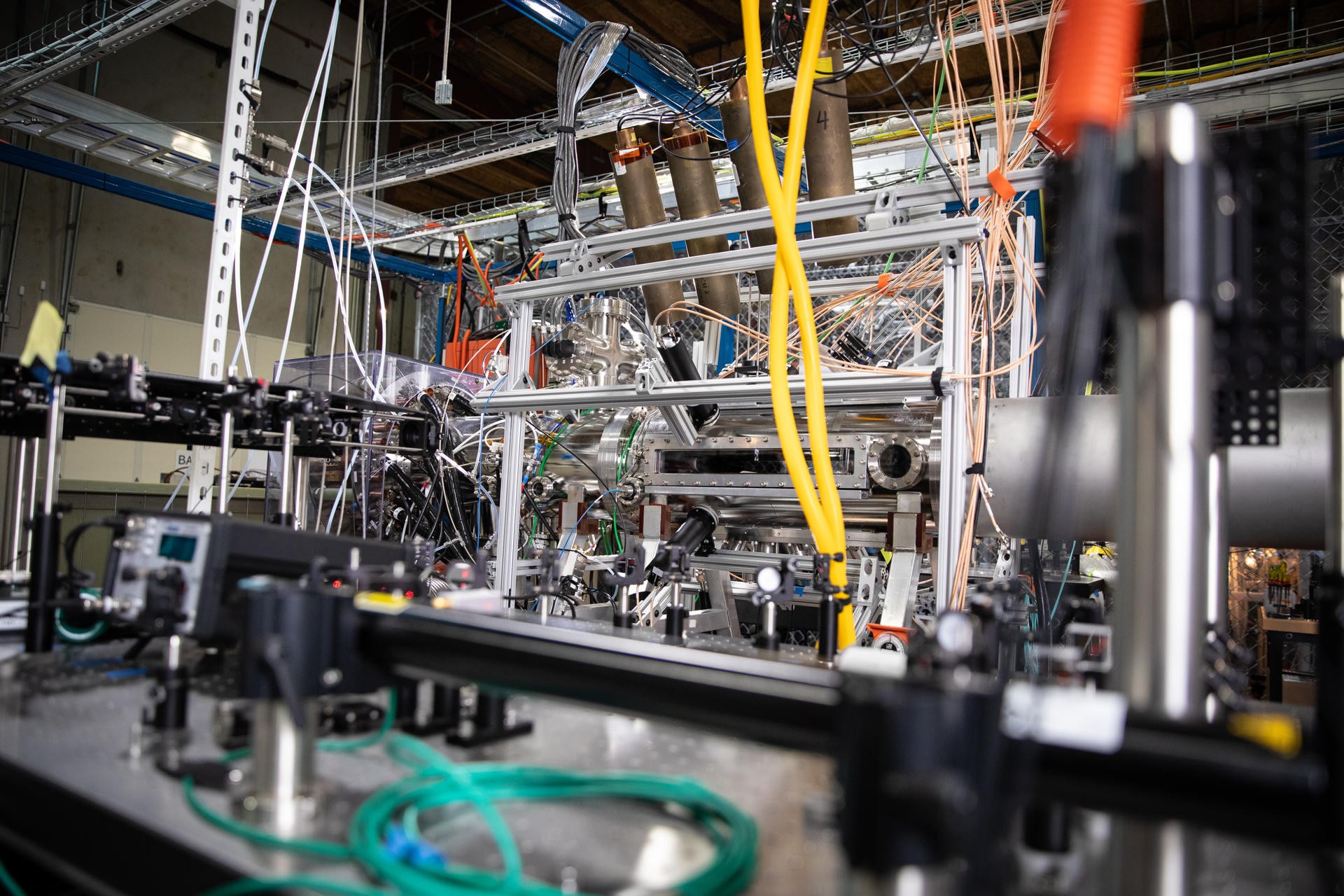
The Fusion Z-pinch Experiment (FuZE) was initially designed in 2014 and 2015 at the University of Washington in Seattle as the successor to the ZaP and ZaP-HD flow z-pinch devices. Initial FuZE studies concentrated on neutron production, measurement, and analyses at up to 400 kA pinch currents. The FuZE power banks supported Z pinch lifetimes of several microseconds.
Following the incorporation of Zap Energy, the FuZE machine was moved from UW to a Zap Energy facility, pushing operation up to 500 kA pinch currents and pursuing further advancements in plasma operation. In 2022, both ion and electron temperatures in the 1-3 keV range were measured, consistent with thermal equilibrium, along with densities up to 5e17 cm-3 and pressures in the 100s of MPa. The thermonuclear nature of the neutron generation was confirmed, with axial extent of 10-50 cm. D-D neutron yields of ≈ 10e8 were observed, limited by the FuZE power bank's stored energy. In 2025 the FuZE device was decommissioned.
FuZE-3
Zap Energy
2025 - Present
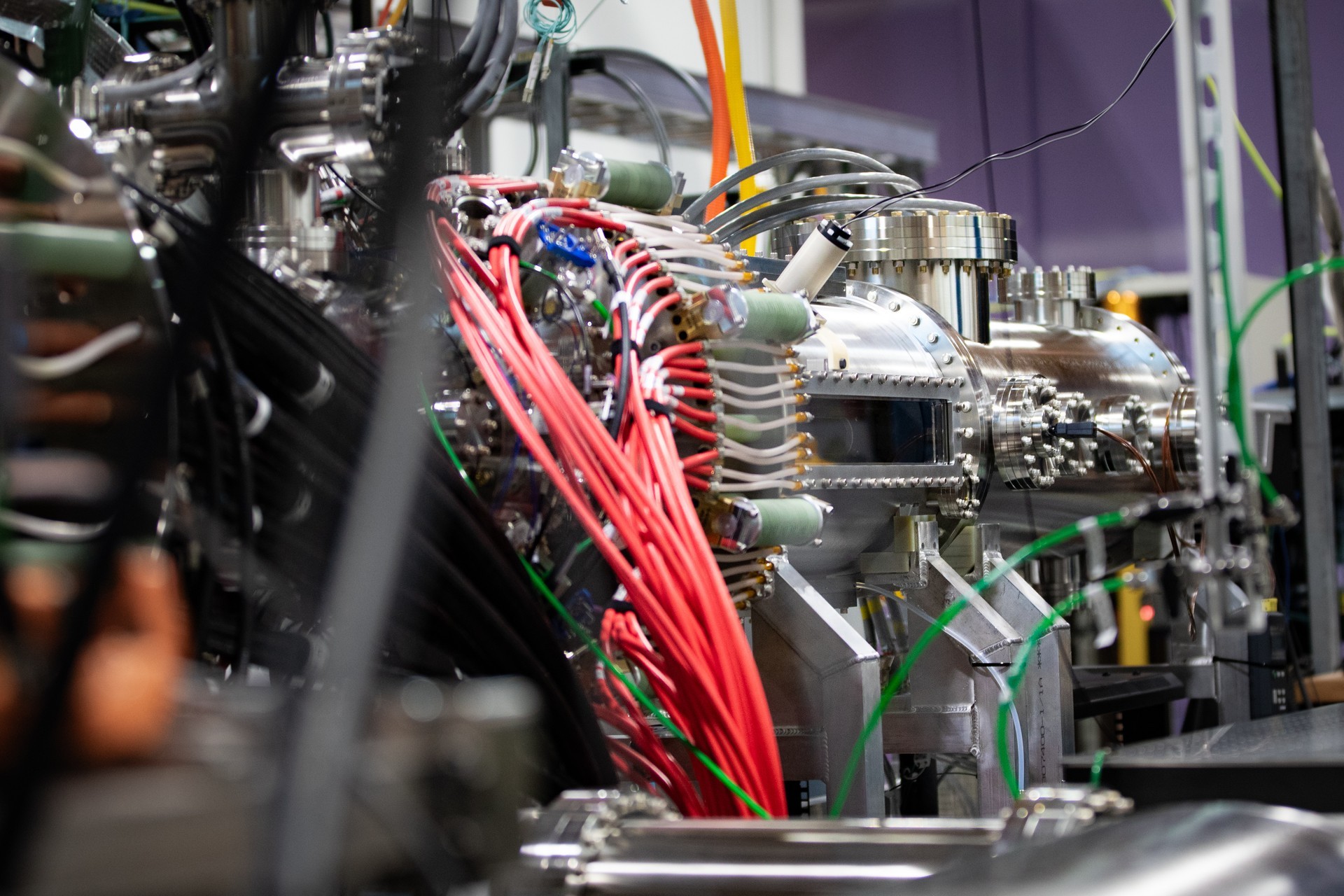
The Fusion Z-pinch Experiment 3 (FuZE-3) investigates compression methods for a sheared-flow-stabilized Z pinch. The device leverages multiple electrodes to inject magnetic flux around the pinch, thereby increasing the pinch current and decreasing pinch radius. FuZE-3 was commissioned at Zap Energy in 2025, demonstrating >1 GPa plasma pressures including multiple repeated shots with electron densities in the range of 3-5x10^24 m-3 and electron temperatures above 1 keV in early science campaigns.
FuZE-Q
Zap Energy
2022 - Present
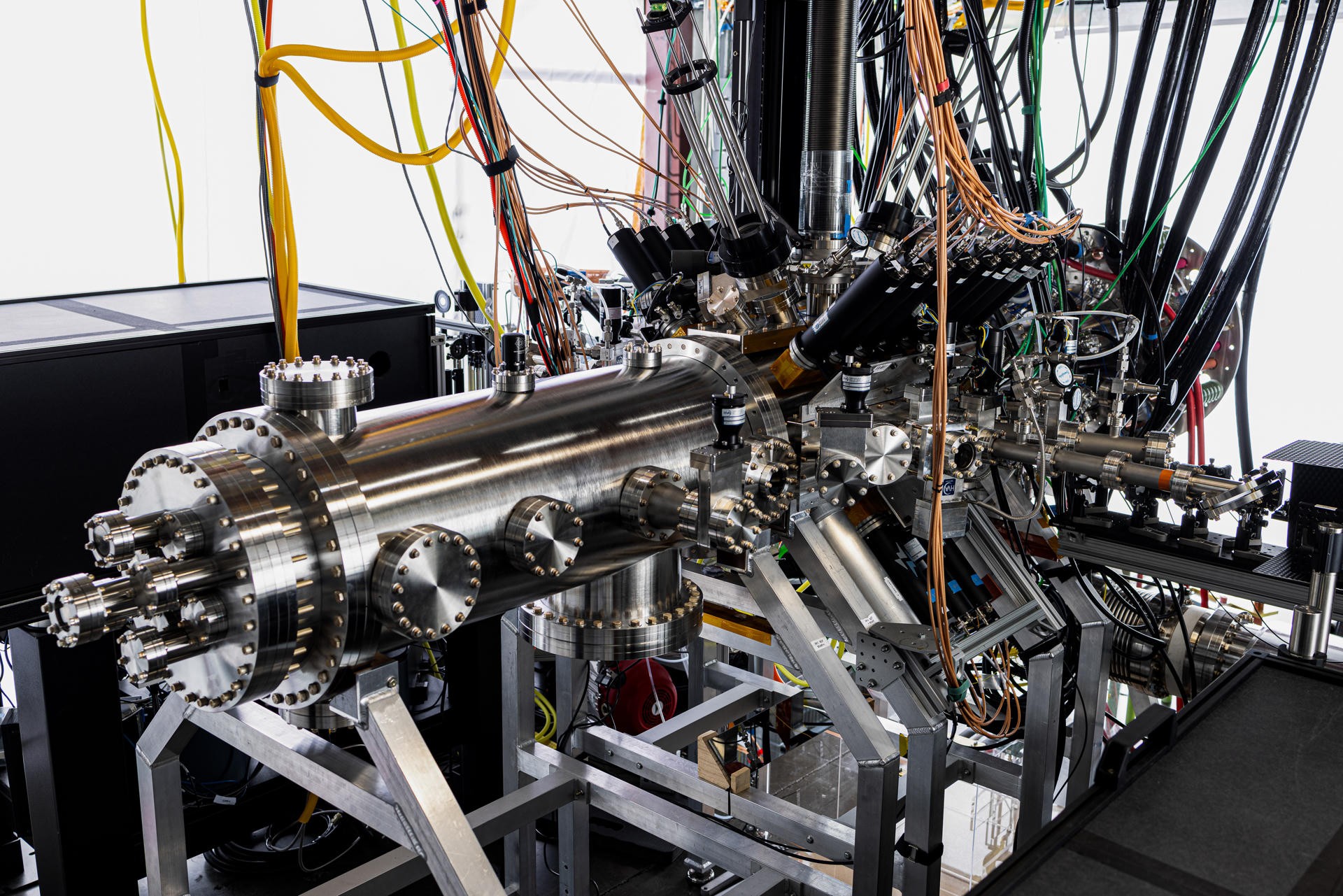
The Fusion Z-pinch Experiment Q (FuZE-Q) is Zap Energy's 2nd generation machine and the 4th generation of SFS Z-pinch machines. FuZE-Q was the first system designed and built fully by Zap Energy. The plasma chamber is similar in scale to its predecessors but incorporates a modular design and the ability to more easily modify components. The machine also allows more advanced gas injection configurations and diagnostics access. FuZE-Q was commissioned in 2022 and operates in a two-electrode configuration using pulsed power banks with significantly larger stored energy (1 MJ+) than used for previous SFS Z-pinch machines. The higher level of stored energy opens up new operating regimes, both in terms of peak power delivered and by extending the duration of the plasma pulse to approximately 100 us. As of 2023, FuZE-Q has demonstrated peak plasma currents above 600 kA and D-D neutron yields above 10^10. FuZE-Q has undergone a series of upgrades to its pulsed power driver to access higher operating voltage.
Julong-1
Institute of Fluid Physics
2013 - Present
Qin-1
Xi'an Jiaotong University
ZaP
University of Washington
1999 - 2009
ZaP-HD
University of Washington
2009 - 2015
Z-FFR
China Academy of Engineering Physics
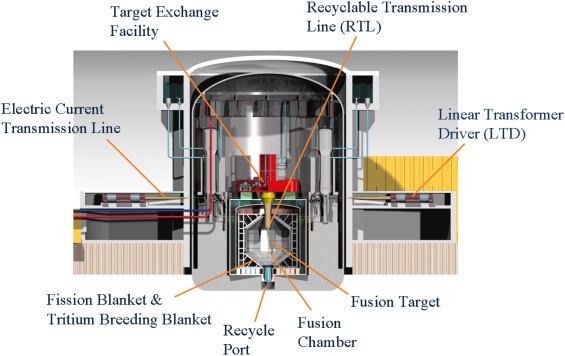
The Z-FFR device was proposed by the China Academy of Engineering Physics as a nuclear fusion-fission hybrid device.
The device aims to use the neutrons produced from D-T fusion in a Z-Pinch configuration to generate additional energy from a fission blanket.

