
Commonwealth Fusion Systems (CFS) is the first international partner to join the LIthium BReeding Tritium Innovation (LIBRTI) program, the UK Atomic Energy Authority's (UKAEA) initiative for testing tritium breeding blankets. CFS will provide the test material for the first experiments and UKAEA will provide the neutron test facility at its Culham Campus.
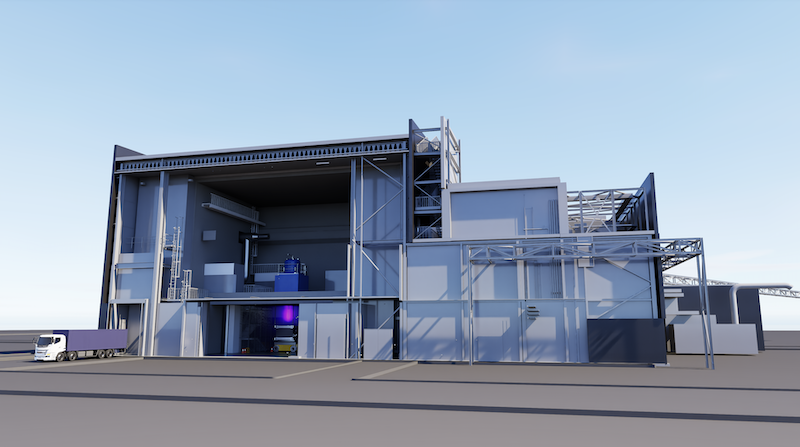
Breeding tritium
Tritium, one half of the deuterium-tritium fusion reaction, doesn't exist in useful quantities in nature due to its 12-year half-life. To generate tritium in a fusion power plant, it's anticipated that it will be bred from the reaction of neutrons with lithium in a tritium breeding blanket. This collaboration will test this process using FLiBe, a lithium-containing molten salt which CFS plans to use as its tritium breeding media in its planned fusion power plant, ARC.
The neutron source
The neutron source will come from SHINE and will deliver a neutron flux of about neutrons per second per square centimeter to the test area. This is about a thousand to ten thousand times lower than the anticipated neutron flux in a power plant like ARC, highlighting the fact that there's a gap in the intensity of available neutron sources between what's available today and what's expected from future fusion power plants. Although it won't reproduce power plant relevant neutron flux, it will reproduce the fast neutron energy spectrum characteristic of the deuterium-tritium reaction.
The tritium breeding media
CFS will provide the blanket test unit which will contain "tons" of FLiBe. This amount of FLiBe is larger than what's been tested in the past in bench-scale experiments and represents a major scale up in the quantity of FLiBe which will be handled.
Lots to be learned
This project will improve the capabilities of CFS to handle and manage tritium breeding in large amounts of FLiBe molten salts and CFS plans to publish the results of what it learns in the process. The project is currently in the design and sourcing phase. CFS plans on unpacking crates for the project to begin assembly at UKAEA around the end of 2029.

