
We sat down with David Perez, Founder and CEO of the New Mexico Innovation Hub (NMIH), to discuss the fusion cluster taking shape in Santa Fe and why he is betting on New Mexico as a home for fusion companies.
The New Mexico Innovation Hub is a midtown Santa Fe campus built to connect the region's national laboratories with private industry, and to give fusion and advanced energy companies a place to land, build, and grow. The campus is demand-driven, developed in response to over 300 stakeholder interviews. Perez has taken two companies from idea to exit, most recently a healthcare technology company, before turning to the harder problem of building an entrepreneurship ecosystem in Santa Fe. He is also Chairman of the Board of the New Mexico Angels and Vice Chair of the City of Santa Fe's Economic Development Advisory Committee, roles that give him deep relationships across the state's investment and government communities.
What is the thinking behind clustering fusion companies together at the New Mexico Innovation Hub, and how far do you want to take it?
We have the start of a fusion cluster here through Woodruff Engineering and Liberty Fusion, and expanding it is a real priority. The logic is simple: the more fusion-related businesses we have in one place, the more they help each other, and the more they draw in funders, investors, and the related industries that serve them. A cluster creates its own gravity.
This is also part of a much bigger bet. New Mexico has spent generations as an oil and gas state, and we are working to diversify that economy by turning the extraordinary science at our national labs into companies. Fusion is how we anchor that effort, and Santa Fe has the labs, the capital, and the quality of life to make it real. So while we are proud of the two companies anchoring the cluster today, the goal is to bring in many more and make Santa Fe a place the fusion industry recognizes as its own.
You have filled the existing campus in a matter of months and are already building more. What does that momentum look like, and what are you building?
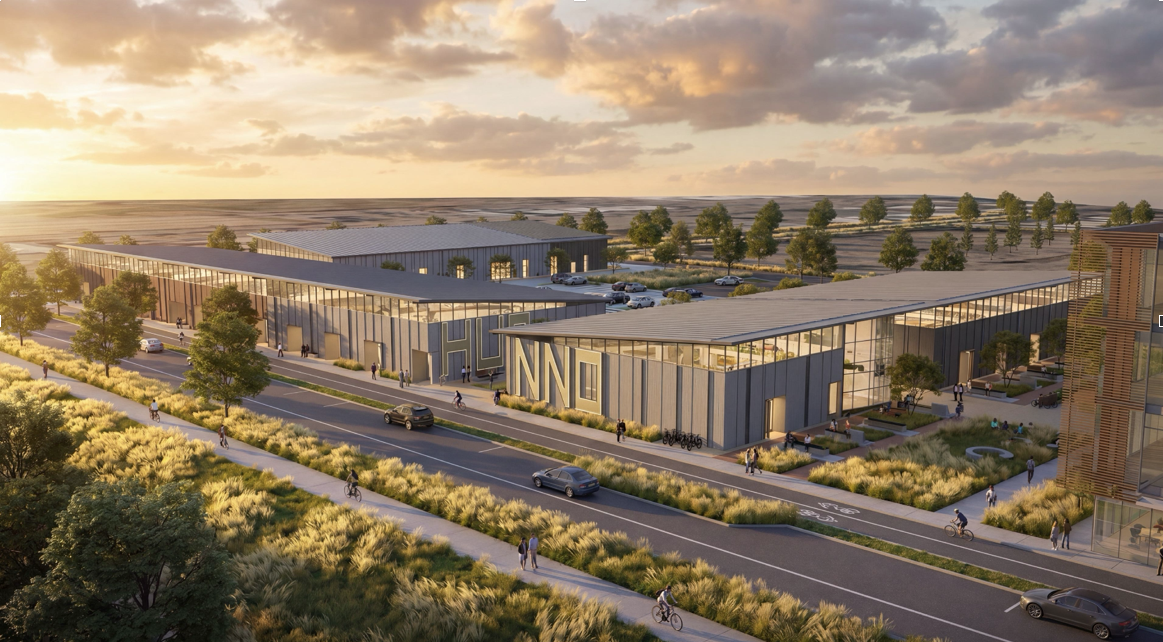
Since January we have filled roughly 70,000 square feet of previously vacant buildings, an old gymnasium, an old tennis club, all within a two-minute walk of each other on our midtown campus. We are now full. I am not a real estate person, and the real estate professionals told me that kind of absorption normally takes a year or more. We did it in about five months, and demand is pulling us forward rather than the other way around. To me that is the clearest possible signal of the pent-up demand in the Santa Fe and Los Alamos region.
The next phase is 75,000 square feet of new high-bay lab space, with construction starting in the first quarter of 2027 and completion expected in the third quarter of 2028. That space is built for fusion supply chain companies that need more than an office: 22-foot ceilings, mezzanines, layouts built to suit each tenant, and ample three-phase power, roughly 10 MW of service to the campus. The financing is in place, and we are already pre-leasing, so companies are asking to hold space before the buildings even exist. A 50,000 square foot office building will follow, along with a cafe we are interviewing local Santa Fe restaurants to run.
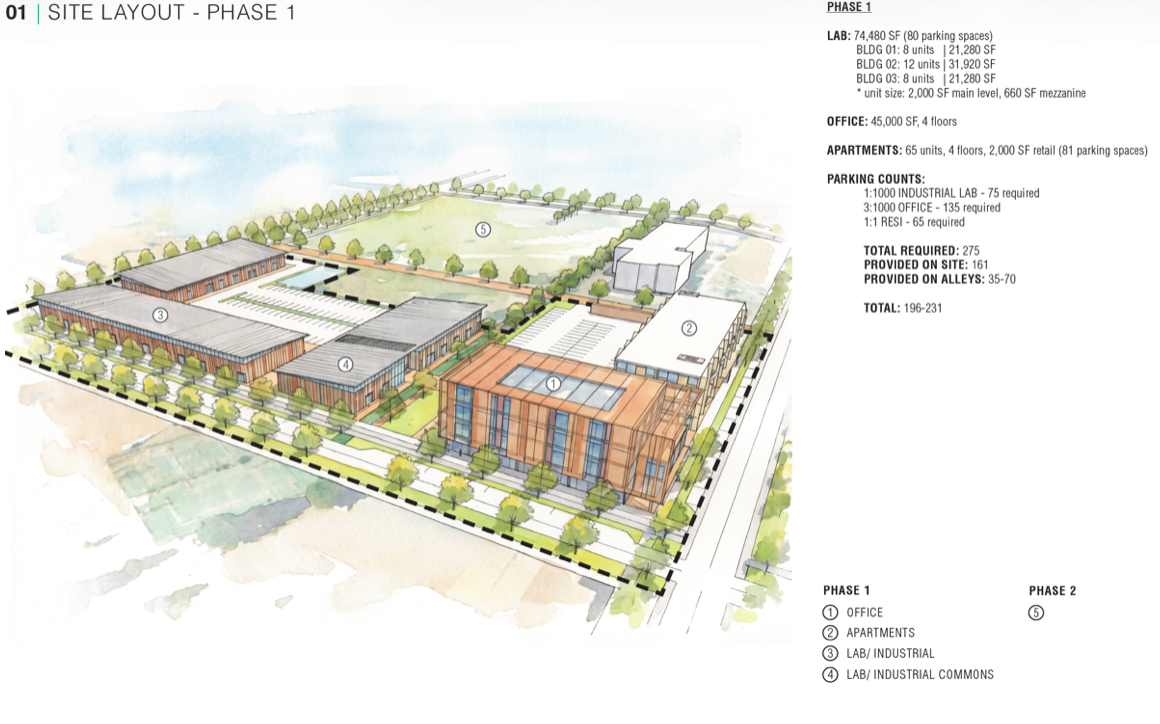 The next phase: 125,000 square feet of new high-bay lab and office space, already pre-leasing before construction begins.
Beyond the buildings, we are creating an ecosystem where scientists, academics, students, entrepreneurs, investors and state agencies gather. This community on the same 5 acre campus will generate economic momentum. In addition we are working with the State to obtain funding to build labs with equipment to be shared by members on campus, shared instrumentation that no single startup could justify on its own.
Santa Fe sits between Los Alamos and Sandia. How does the Hub turn that proximity into real tech transfer?
We are 36 miles south of Los Alamos and 40 miles north of Sandia, so we are a natural meeting point for people from both labs, and both are interested in leasing space and working closely with the companies here. Los Alamos in particular is the anchor that makes the whole ecosystem work, the magnet that draws students, industry, and companies that want to be close to the science. The talent concentrated at the labs, and at University of New Mexico and New Mexico Tech, is the raw material for everything we are building.
Just as important, the Hub is an unclassified, entrepreneurial environment, so private industry can meet openly with lab employees and students. The Feynman Center for Innovation, the office that helps Los Alamos commercialize its technology, is a sponsor of the Hub, and we work closely with them through programs like their Lab Embedded Entrepreneur Program. One of those companies, Bandelier Technologies, is already a tenant here, and our job is to help companies like that grow and stay in New Mexico. The same lab strengths that anchor fusion also anchor quantum, which is the other sector we are actively drawing.
For a fusion company weighing where to locate, what does New Mexico offer that other places don't, and how do your own relationships factor in?
The state has made a deliberate choice to back this industry. Fusion is one of the target sectors New Mexico has identified, and a fusion founder can come here without having to explain what they do, because the state already understands the opportunity.
The capital backs that up. New Mexico's sovereign wealth fund, the State Investment Council, is one of the largest in the country at more than $74 billion. Through its Strategic Venture Capital Program it has committed about $1.8 billion to more than 30 venture firms with a mandate to invest in New Mexico, and advanced energy, including fusion, is a priority. That capital is already reaching the sector: Pacific Fusion is among the companies supported through the program's venture funds. There is also non-dilutive state capital available. Liberty Fusion, one of our anchor tenants, recently won a $625,000 non-dilutive New Mexico Advanced Energy Award from the state.
My own role is to make that landing softer. I have spent 17 years building relationships across this community, I am the Chairman of the Board of the New Mexico Angels, and I serve as Vice Chair of the City of Santa Fe's Economic Development Advisory Committee. I am happy to be a direct conduit for fusion companies that want to understand New Mexico, so they are not starting from a cold introduction.
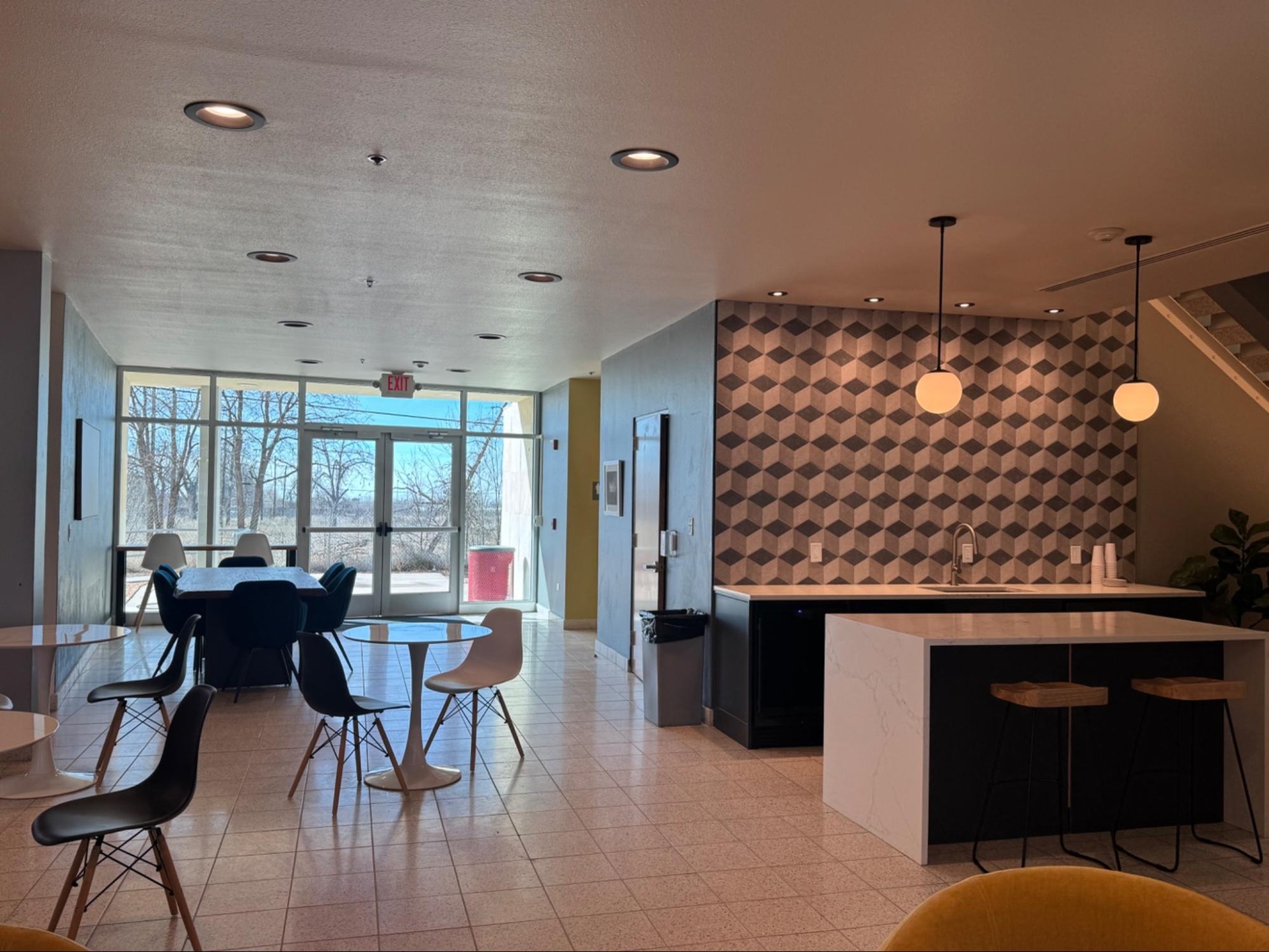 Inside the Hub: modern, move-in-ready space at the center of a growing fusion cluster.
How did your professional path lead to the Hub?
My first company was an internet media and marketing agency I started in New York in 1999 and sold in 2009, after which I moved to Santa Fe. I found a tiny startup ecosystem here, with only three venture firms, each under $100 million in assets, and very few entrepreneurs who had raised money and built businesses. I started a healthcare technology company here in 2011 and sold it in 2017, and doing that in such a small ecosystem was hard.
That experience pushed me toward a bigger question: how do we use the substantial assets this state has to grow and diversify our economy so we are less dependent on oil and gas, especially as New Mexico moves toward carbon-free electricity by 2045. A huge part of the answer is tech transfer, taking the talent at Los Alamos, Sandia, the Air Force Research Laboratory, University of New Mexico, and New Mexico Tech and turning it into companies.
In June 2024, I brought 65 stakeholders together for a workshop on exactly that, and we came out with three themes: access to capital, workforce development, and infrastructure. The Hub is our answer to the infrastructure piece, a modern place that makes people want to be here and to support workforce development.
Finally, beyond the labs and the capital, what makes Santa Fe a place people actually want to move to?
Santa Fe is a unique place and already a global destination. We have 310 days of sunshine a year, a ski area just 15 miles from downtown, and world-class hiking, mountain biking, road biking, fly fishing, and camping, with even more skiing within a few hours' drive.
It is also a deeply cultured place. We have been a capital city for 400 years, with extraordinary museums, performing arts, and an opera house that is world class. I moved here from New York 17 years ago, and after all the traveling I do, every time I come home I know I do not want to live anywhere else. We want to use all of those assets to attract entrepreneurs and technologists to build their companies here, and to build their lives here too.
To learn more about the New Mexico Innovation Hub, visit newmexicoinnovationhub.com.
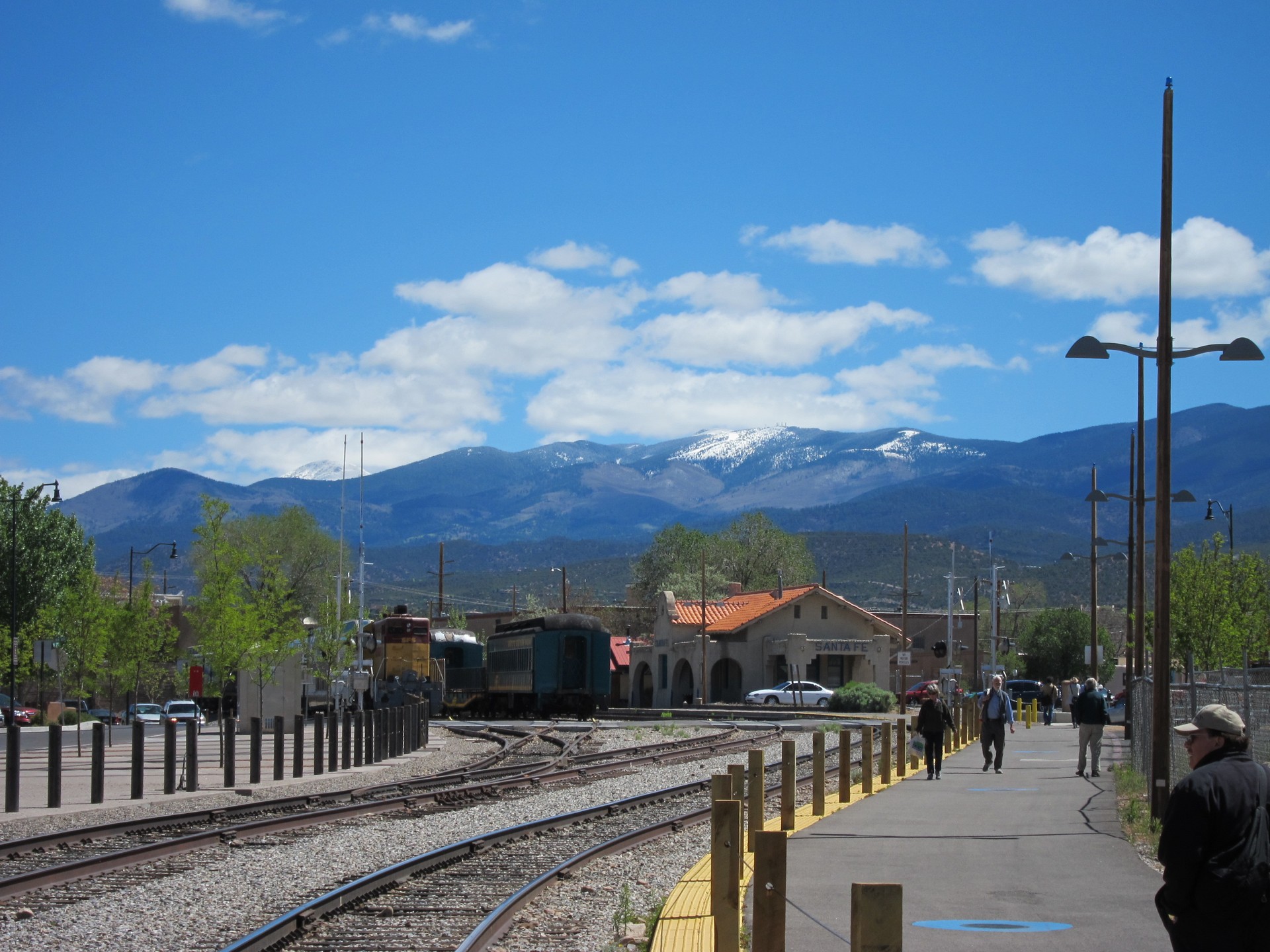 Snowy mountains tower above the Santa Fe train station. “Snow-Capped Santa Fe Mountains” by Eugene Kim, CC BY 2.0

